 EN
EN


Conventional solar panels waste heat and also experience efficiency degradation due to heat. Aiming at this problem, our company is launching a 600W PVT solar panel. Unlike traditional solar panels, it has a layer of suction tubes inside to absorb heat.
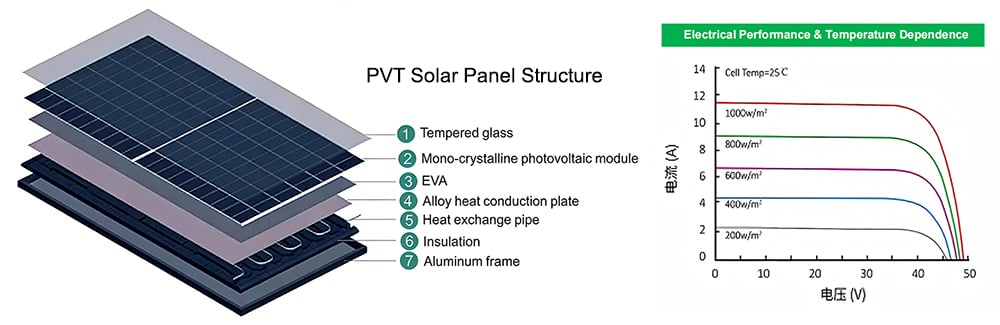
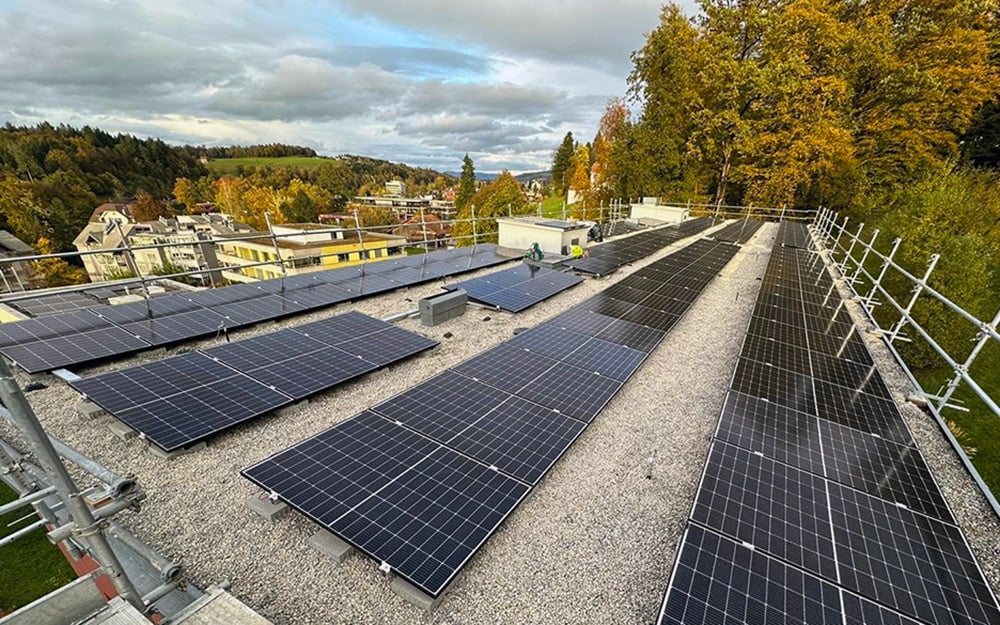
From the exterior perspective, the PVT solar panel is no different from other components. The top is the same glass, and the same aluminum frame fixes all the components together. The difference lies in the internal structure of the panel, namely the structure between the battery sheet and the backsheet insulation layer.
The standard PV component structure is: glass, battery sheet, EVA, backsheet. Our PVT solar panel is based on this structure and adds an additional layer behind the battery sheet. Behind the EVA encapsulation layer is a heat-conducting plate, below the heat-conducting plate is a group of stainless steel heat exchange tubes. Below the heat exchange tubes is a ceramic insulation plate. Below the insulation plate is a thick integrated insulation plate. All these components are encapsulated within the aluminum frame.
Now, let's take a look at the underlying principle. There is no doubt that the efficiency of PV cells will decrease during the heating process. In the hot summer, when the temperature exceeds 25°C, for every degree increase, its power will be lost by 0.4% to 0.5%. However, since the panels are still generating electricity, these losses are not easily detectable.
High temperatures also accelerate battery aging. Ordinary solar panels absorb heat and remain in a high-temperature environment for a long time. The heat exchange tubes built into our PVT solar panel provide an outlet for the heat. Circulating water flows through the internal network pipes, taking away the heat from the heat-conducting plate located behind the battery. The battery temperature then drops. Since the operating temperature of the battery is close to 25°C, the instantaneous output power is improved. Over time, the performance degradation curve flattens. The liquid flowing out from the other side is warm enough to preheat the water needed for the building.
Therefore, this PVT solar panel is a dual-output solar panel. You can use it to generate electricity and also obtain hot water from the outlet. One PVT solar panel can achieve two independent outputs.
The heat flow path of the PVT solar panel is as follows: Sunlight passes through the glass and is directed onto the battery, generating heat while generating electricity. The heat will be absorbed by the alloy heat-conducting plate built into the panel. Water flows through the pipes, absorbing the heat from the upper heat-conducting plate, and finally, usable hot water is produced.
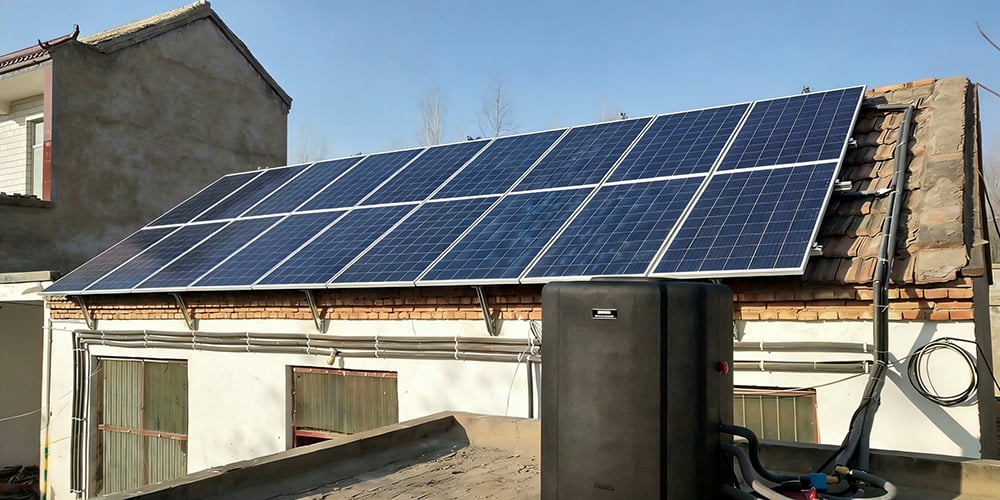
The PVT solar panel has a wide range of applications. Based on the actual living environment and installation conditions of the customers, we can combine heat pumps to form a personalized system. In cold regions, it can provide heating and hot water supply for users while generating electricity, serving three purposes with one machine and greatly saving electricity and heating fees. Of course, they can also be integrated with the floor heating system.
Most importantly, we have already completed the relevant testing and certification for PVT solar panel. If you are involved in the distribution of HVAC equipment, system design, or multi-unit residential development industries, and are interested in PVT solar panel or heat pump systems, please feel free to contact us at any time to obtain customized solutions for free.
Copyright © Suzhou WindFull New Energy Co., Ltd.All Rights Reserved — Privacy Policy
